

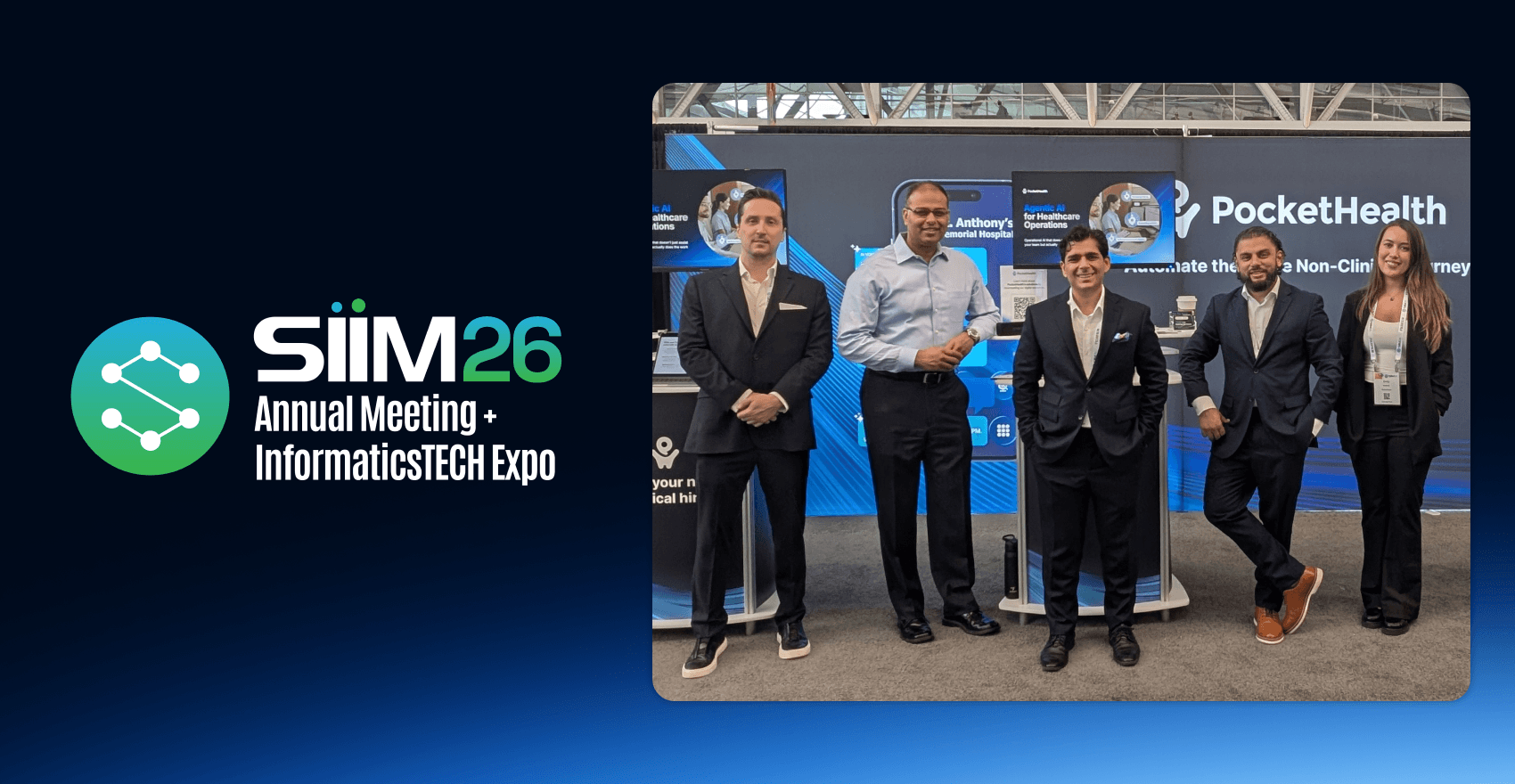
Clinical AI in radiology has been in execution for years. But the operational side is a different story: that shift from possibility to execution is happening now, and SIIM26 was proof. From the fireside chat on national health IT policy to sessions on agentic AI and operational productivity, this year’s theme, “Building Bridges Across Imaging Informatics,” played out in real time: less about what AI could do, more about how to connect it meaningfully across systems, specialties and care pathways. Three things from the conference are worth sitting with.
The assumption I hear most often is that solving interoperability requires a major infrastructure overhaul: new APIs, IT-heavy integration projects, months of implementation. With agentic AI, most departments already have what they need to start. Agentic AI navigates existing interfaces the way a staff member does: without a system rebuild and without a new integration roadmap, the kind of approach explored in SIIM26’s learning lab on deploying agentic AI workflows that plan, act and coordinate across existing tools. The bridge gets built across the systems that already exist. I explored this further in a recent piece for Aunt Minnie: the network problem in radiology is not what most people think it is.
The concern I hear most often is not that AI will fail. It’s that it will succeed in the wrong direction, making care feel colder and more transactional. But that outcome is a design failure, not an inevitability of automation. The most effective AI is built around how people actually operate, something explored on the clinician side in a SIIM26 session on creating seamless, human-centered imaging solutions. When a patient receives the right prep instructions the morning of their PET-CT, that is not a robotic interaction. It prevents a wasted scan and a rescheduled appointment. Personalization improves when friction is removed, and staff freed from low-value coordination work show up fully for the moments that require human presence. Clear Medical Imaging saw this firsthand. After automating the full referral to scheduled workflow end-to-end, they achieved a 4.5 out of 5 patient satisfaction rating while freeing their team for the work that matters most.
Radiology has invested heavily in clinical AI, and rightly so. Operational bottlenecks (delays, errors, patients whose care is held up before they ever reach the read) have an equally adverse effect on clinical outcomes, yet they receive a fraction of the same attention. They waste clinical staff time, underutilize machines and delay patient care. It is a tension I explored in a recent Aunt Minnie webinar, and one that Dr. Ram Chadalavada (Professor of Radiology (VIR) & Surgery, University of Cincinnati) and Carl Swanson (AVP Enterprise Imaging, MedStar Health) addressed head-on in our session at SIIM26, “Agentic AI for Radiology Operations: Technical Architecture, Deployment Realities, and Operational Outcomes.” The field has spent years optimizing the read. It is time to apply the same urgency to everything that happens before it.
The risk at this stage is not overreach. It’s waiting. The organizations that embrace operational AI now will widen the gap between themselves and those that don’t, driving better patient outcomes and stronger clinical capacity along the way. The good news is that moving quickly does not mean moving recklessly. Crawl, walk, run: identify one high-volume, operationally safe workflow, prove it holds and build from there. The organizations setting the standard twelve months from now are the ones starting today.
PocketHealth is the AI-enabled workflow automation platform transforming health system operations. With three interconnected solutions (Conductor, Image Exchange and Patient Connect), PocketHealth automates all manual, non-clinical tasks across the patient journey, from requisition processing to inbound call management to seamless image sharing and patient engagement. As a result, providers can redeploy staff, expand margins and deliver safer, more seamless care, while patients gain the knowledge and guidance they need so follow-ups don’t fall through the cracks. PocketHealth is SOC2- and HIPAA-compliant, and is trusted by more than 900 hospitals and imaging centers across North America. Request a demo today.


